
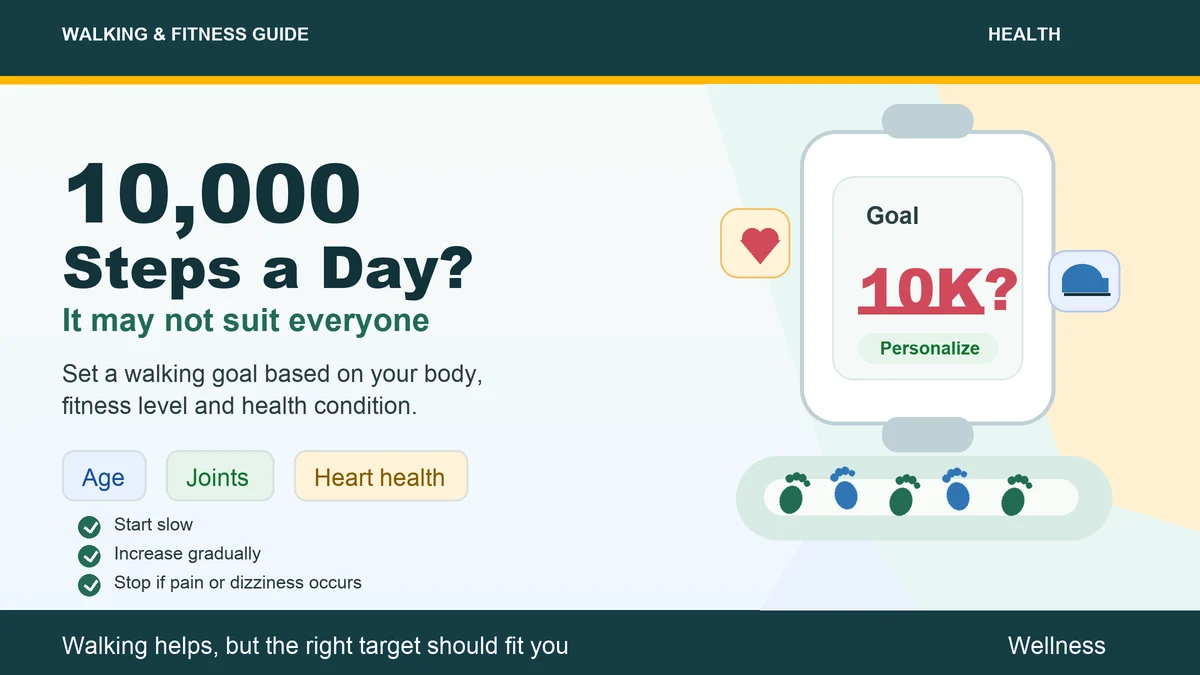
Walking is one of the easiest ways to stay active. It supports heart health, helps manage weight, improves mood, reduces stress and keeps the body moving. But the popular 10,000-step target is often misunderstood.
Many people treat 10,000 steps as a fixed rule for good health. In reality, it is not a universal medical recommendation. For some people, 10,000 steps may be achievable and helpful. For others, especially those with pain, low fitness, heart problems or recent surgery, trying to reach that number suddenly may do more harm than good.
Key Takeaways
- Walking is healthy, but 10,000 steps is not a medical rule.
- Some people may benefit from fewer steps, especially beginners, older adults or those with joint pain.
- People with heart conditions, recent surgery or chronic illness should increase activity gradually.
- Consistency, pace and comfort matter more than blindly hitting a number.
Where Did the 10,000-Step Rule Come From?
The 10,000-step goal became popular through pedometers and fitness trackers. It is easy to remember, so it became a common daily target. But health research now suggests that benefits can begin at lower step counts too.
Studies have found that increasing daily movement matters more than reaching one perfect number. For inactive people, even moving from very low activity to 4,000 or 5,000 steps a day can be meaningful.
Why 10,000 Steps May Not Suit Everyone
The same walking goal cannot work for every person. Age, weight, medical history, fitness level and joint health all matter.
For someone who already walks regularly, 10,000 steps may feel normal. But for a person who sits most of the day, suddenly pushing for 10,000 steps can cause foot pain, knee strain, back discomfort or fatigue.
People with arthritis, knee problems, obesity, heart disease, breathing issues, diabetes complications or those recovering from surgery should be more careful. They may need shorter walks, slower pace and medical guidance before increasing activity.
What Should You Aim For Instead?
A better goal is personal progress. If you currently walk 3,000 steps a day, aim for 3,500 or 4,000 first. Once your body adjusts, increase slowly.
You can try:
- Start with 10 to 15 minutes of walking daily
- Add 500 to 1,000 steps gradually
- Take short walking breaks instead of one long walk
- Choose comfortable footwear
- Walk on flat, safe surfaces
- Stop if pain, dizziness or chest discomfort occurs
For many adults, public health guidelines focus more on weekly activity than step count. The CDC recommends at least 150 minutes of moderate-intensity activity per week, along with muscle-strengthening activities on 2 days a week.
When to Be Careful
Do not force yourself to complete 10,000 steps if you feel unwell. Stop walking and seek medical advice if you notice chest pain, unusual breathlessness, dizziness, fainting, severe joint pain or swelling.
People with heart conditions, recent surgery, uncontrolled diabetes, severe arthritis or balance problems should speak to a doctor before starting a new walking goal.
Final Words
Walking is good for health, but the 10,000-step rule should not become pressure. The best walking goal is the one your body can handle consistently.
If you are already comfortable walking 10,000 steps, you may continue. But if that number feels difficult, painful or stressful, start smaller. A mindful, gradual and personalized walking routine is safer and more sustainable than blindly chasing a fitness tracker target.
Disclaimer: This article is for general information only and is not medical advice. Please consult a qualified healthcare professional before changing your exercise routine, especially if you have a medical condition.